
Criminal Court Records in Mayes County
A criminal court record is the case file the court clerk opens once charges are filed. In Mayes County, that custodian is the Court Clerk, who records and keeps the permanent files of every District Court case. The file grows as the case moves. It holds the charges, the pleas, the motions, the hearing dates, and the final result. Court Clerk Sarah Wallace runs this office at the courthouse in Pryor. Her staff handles civil, probate, juvenile, and small claims files too, but the criminal files draw the most public searches.
Most criminal cases in the county are heard in District Court. Felony cases carry a CF prefix, and misdemeanor cases carry a CM prefix. A felony is the more serious class and can bring a prison term. A misdemeanor is the lesser class and usually brings jail, a fine, or probation. Pryor Creek Municipal Court handles city ordinance citations, which run on a separate track. For a closer look at the counts a prosecutor files, the Mayes County arrest records and charges page goes deeper, and the broader court records page covers civil, probate, and traffic files as well.
How to Search Mayes County Criminal Court Records
The main portal for county criminal cases is On Demand Court Records, known as ODCR. The Mayes County Court Clerk page links to it as Search Court Records. ODCR covers Oklahoma District Courts and lets you search by name or case number. Criminal Felony Proceedings and Criminal Misdemeanor Proceedings both appear as case types in the menu.
- Open the ODCR court records portal and set the court to Mayes County.
- Search by defendant name in Last, First form, or enter a full case number.
- Narrow the results by case type, such as Criminal Felony Proceedings, and by filing date.
- Open the case to read the docket, the charges, and the disposition.
- Request a certified copy from the Court Clerk if you need an official document.
A second option is the Oklahoma State Courts Network, or OSCN. Its docket search includes a case-number lookup for Mayes County District Court, using a format like CF-2014-1. The search page may show a human-verification step first. For older files, sealed-record questions, or documents marked available at the clerk's office, call the Court Clerk at 918-825-2185.
Note: Charges listed on a jail roster are booking descriptions, not the formal counts a prosecutor files, so always confirm the filed charges in the court case.
Stages of a Criminal Case
A criminal case moves through set stages, and each one leaves a mark in the record. The docket lists these events in date order. Reading them in sequence shows how the case unfolded, from the first charge to the last order.
Case flow: Charges Filed › Arraignment › Pretrial / Motions › Plea or Trial › Disposition › Sentencing
Not every case reaches trial. Many end with a plea agreement well before a jury is seated.
| Stage | What Happens |
|---|---|
| Arraignment | The defendant hears the charges, learns their rights, and enters a first plea. Bond terms are often set here. |
| Pretrial / Motions | Lawyers file motions, share evidence, and argue legal issues. Many cases resolve through a plea at this point. |
| Plea or Trial | The defendant pleads, or a judge or jury hears the case and reaches a verdict. |
| Sentencing | After a guilty plea or verdict, the judge sets the penalty, which can include fines, costs, probation, jail, or prison. |
What a Mayes County Criminal Court Record Shows
The criminal file follows a standard shape. A search result and the full docket together show the fields below. Charge entries usually cite an Oklahoma statute under Title 21, the state criminal code. Some docket lines note that a document is available only at the Court Clerk's office.
| Field | What It Shows |
|---|---|
| Case Number | The court's ID for the case, such as a CF number for a felony or a CM number for a misdemeanor. |
| Defendant | The person charged, listed by name in the court index. |
| Charges | Each count filed by the prosecutor, tied to an Oklahoma statute. |
| Plea | The formal answer to each charge, such as guilty, not guilty, or no contest. |
| Disposition | The outcome of each charge, such as a conviction, dismissal, or acquittal. |
| Sentence | The penalty set after a conviction, including fines, costs, probation, or confinement. |
Charges vs. Convictions
Being charged is not the same as being convicted. A charge is an accusation that the case must still prove. A conviction is a finding of guilt by plea or verdict. A criminal court record can show counts that were later dropped, dismissed, or ended in acquittal, so reading the disposition matters as much as reading the charge.
| Charge | Conviction | |
|---|---|---|
| Stage | Accusation | Verdict or plea |
| Burden of Proof | Probable cause | Beyond reasonable doubt |
| Public Record | Yes | Yes |
Reading Dispositions and Sentences
Disposition is the legal word for how a charge ends. Common dispositions include guilty, not guilty, dismissed, and nolo contendere, which means no contest. A deferred sentence lets a defendant avoid a conviction by meeting court conditions over time. The sentence section then shows any fine, court cost, probation term, or confinement set by the judge.
Oklahoma also runs treatment-based programs that can replace a jail or prison term. Adult drug court is the best known. The state describes how these court-supervised programs work on the Oklahoma Department of Mental Health and Substance Abuse Services drug court program page.
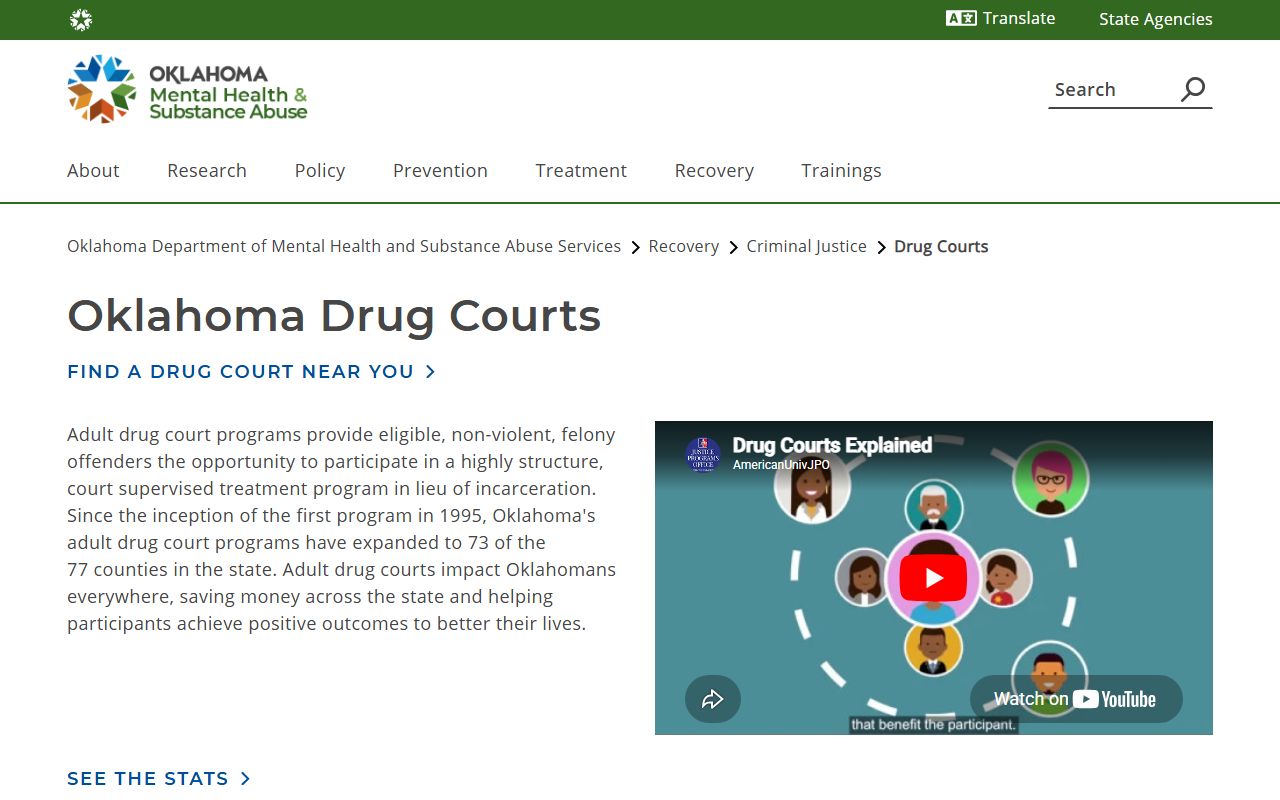
These programs are statewide and reach most counties, but no separate Mayes docket is confirmed in official sources, so local eligibility should be checked with the Court Clerk, the District Attorney, or defense counsel.
Federal Criminal Cases in Mayes County
Not every criminal case in the county is a state case. Federal crimes are charged and tried in federal court, not in District Court. Mayes County sits in the U.S. District Court for the Northern District of Oklahoma. Those files are searched through PACER, not ODCR or OSCN.
Charging decisions in federal matters rest with the U.S. Attorney's Office for the Northern District of Oklahoma.
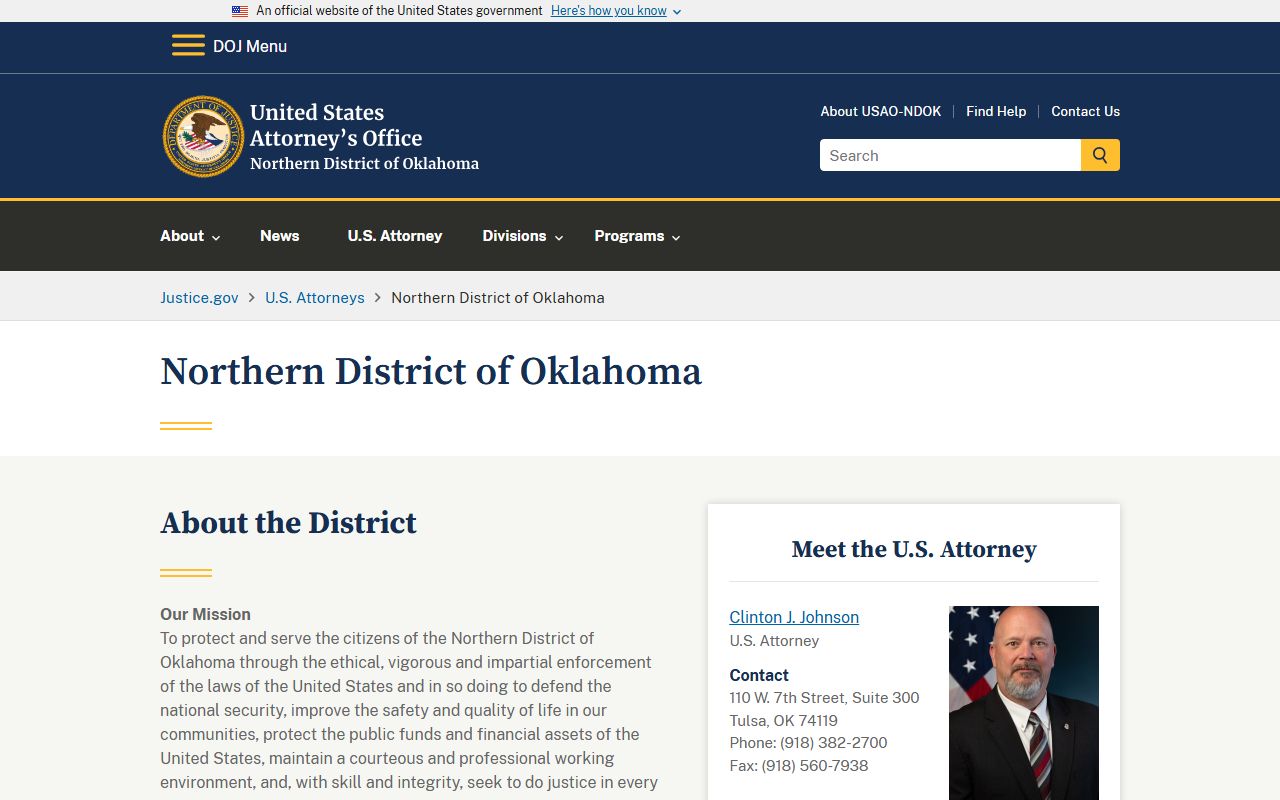
Federal dockets, federal custody, and federal appeals all run on separate systems from the county court, so a state case search will not show them.
Sealed vs. Expunged Records
Oklahoma lets people seal or expunge qualifying records, and the two terms are not the same. Sealing hides a record from public view. Expungement goes further and treats the record as if it never existed. Eligibility is set by Title 22 of the Oklahoma statutes, sections 18 and 19.
The Oklahoma State Bureau of Investigation explains the two tracks and their costs on its criminal history record expungement page.
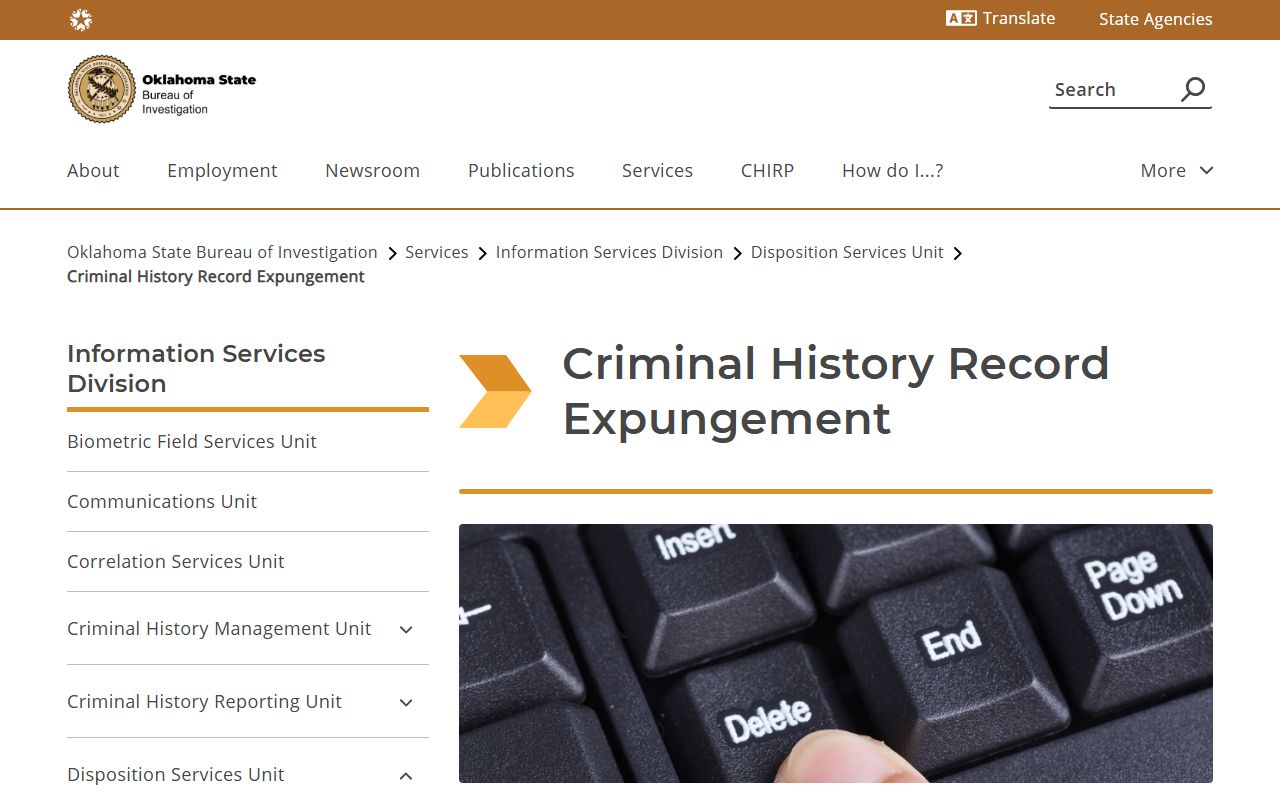
Sealing a court record is free, while expunging an arrest record requires a $150 fee paid to OSBI by cashier's check or money order, since personal checks are not accepted.
| Sealed | Expunged | |
|---|---|---|
| Visibility | Hidden from public | Destroyed / treated as never existed |
| Law Enforcement | Limited access | Very limited |
| Eligibility | Set by court order for qualifying cases under Title 22 | Court-record and arrest-record tracks each have their own rules |
Note: Oklahoma expungement petitions are filed as civil actions in District Court under Court of Criminal Appeals Rule 41, with notice given to the affected agencies.
Costs and Financial Entries
A criminal file does more than record the outcome. It also tracks the money a defendant owes. Court costs, fines, and restitution all appear as docket lines. So do payment plans and balance notices. A felony case in Mayes County, for example, showed cost-of-incarceration amounts, an installment due schedule, a collections fee, an affidavit on ability to pay, and a cost hearing summary.
These entries can include several common items:
- Court costs assessed at the close of the case.
- Fines tied to each count of conviction.
- Restitution ordered to a victim.
- Installment schedules and balance-due notices.
- Collection fees added to unpaid balances.
Local court-cost amounts are not published page by page on the county site, which points instead to the OSCN fee and bond schedules. For the exact balance on a case, or a certified copy of an order, the Court Clerk at One Court Place, Suite 200, is the office to call.
Public Access to Criminal Court Records
Criminal case files are public records in Oklahoma. The Open Records Act sets the baseline rule that people may inspect and copy government records. Court dockets posted online are a convenience, not the official file, so the clerk's certified copy controls if the two ever differ.
Key Statutes:
Oklahoma Open Records Act, 51 O.S. § 24A.5 - Government offices must let the public inspect and copy records unless a statute makes them confidential.
Court of Criminal Appeals Rule 2.6 - The OSCN case search is a public convenience for court records, but the official case file controls in a dispute.
Background Check Considerations
A casual online lookup is not the same as a formal background check. Employers, landlords, and licensing bodies that run background checks must follow the federal Fair Credit Reporting Act. That law sets accuracy and notice rules a quick docket search does not meet. For a complete and current criminal history, the Oklahoma State Bureau of Investigation is the official source.
Important: This site is not a consumer reporting agency under the FCRA, and its information cannot be used for employment, credit, tenant, or other FCRA-regulated decisions.
Restricted Criminal Court Records in Mayes County
Some criminal records stay out of public view. Juvenile cases are confidential under 10A O.S. § 1-6-103 and open only to listed people or by court order. Sealed and expunged cases drop out of the public index. Active investigations and some warrant or victim details can also be withheld by the court.
Mental health court matters under the Anna McBride Act and certain sealed filings are handled with added care. When a record is restricted, the Court Clerk can confirm only what the law allows them to release.